

How AI Has Already Crossed the Limits of Human Intelligence

Has Already Crossed the Limits of Human Intelligence
We often talk about artificial intelligence surpassing human capabilities as something that might happen in the future. But here’s the reality: AI has already exceeded human intelligence in numerous domains. Not in the dramatic, science-fiction sense of conscious machines plotting world domination, but in quieter, more practical ways that are fundamentally reshaping our world.
The Chess Game That Changed Everything
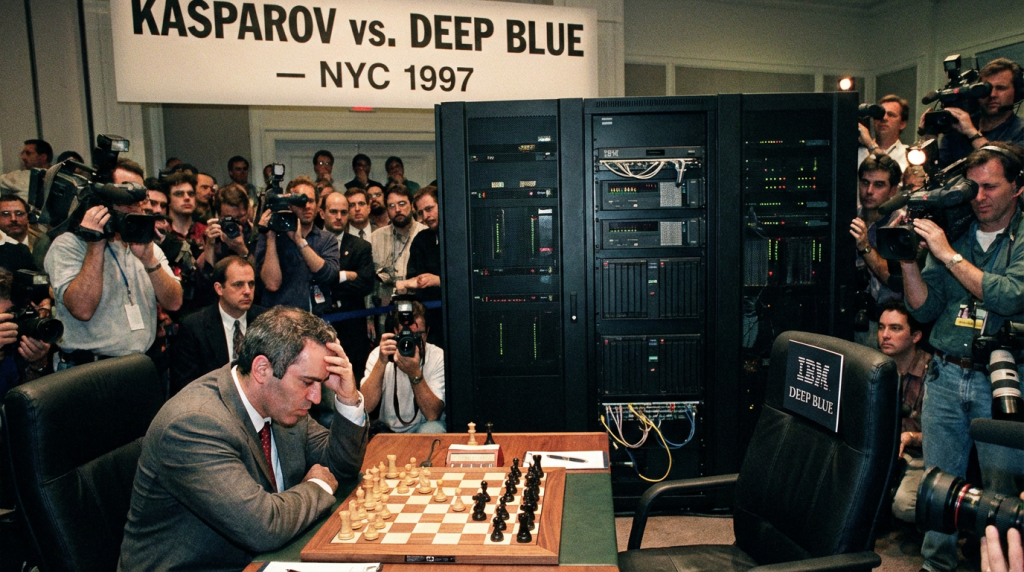
In 1997, IBM’s Deep Blue defeated world chess champion Garry Kasparov. At the time, this felt like a watershed moment, but it was just the beginning. Today, the best chess engines don’t just beat humans—they operate on an entirely different level. A smartphone chess app can now defeat any human player who has ever lived, calculating positions and strategies that grandmasters can barely comprehend.
But chess is just one example. The pattern repeats across countless domains where AI has quietly become superhuman.

Pattern Recognition Beyond Human Capability
Consider medical imaging. AI systems can now detect certain cancers from scans with greater accuracy than experienced radiologists. These systems don’t get tired, don’t have off days, and can process thousands of images in the time it takes a human to analyze one. They’ve crossed a threshold: they’re not just assisting doctors anymore—they’re identifying things human eyes simply miss.
The same is true in protein folding, where DeepMind’s AlphaFold has solved a 50-year-old grand challenge in biology. Understanding how proteins fold is crucial for drug development and understanding diseases. What took human scientists months or years, AlphaFold accomplishes in hours, with remarkable accuracy.
Speed and Scale: Where Humans Can’t Compete
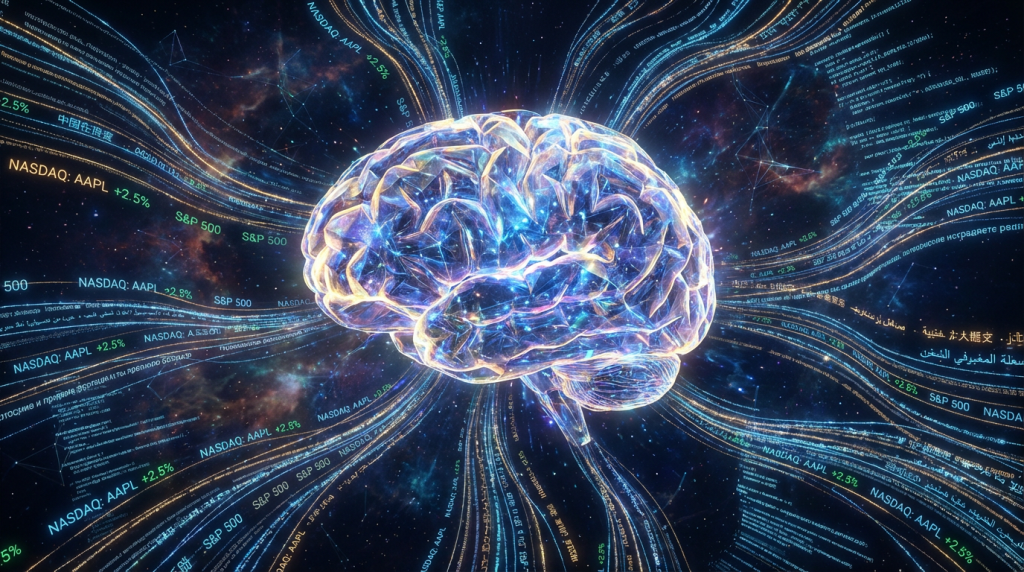
AI has fundamentally surpassed human limits in processing speed and data handling. Modern language models process and understand text in dozens of languages simultaneously. They can read and analyze the entire works of Shakespeare, summarize thousands of research papers, or translate between languages faster than any human translator could even read the source material.
In financial markets, AI trading algorithms execute millions of transactions per second, analyzing market patterns and making split-second decisions that would be impossible for human traders. High-frequency trading has become an entirely AI-dominated domain where human reaction times are simply too slow to participate.
Creative Boundaries Being Redrawn
Perhaps most surprisingly, AI is pushing past human limits even in creative fields. AI image generators can produce artwork in any style, combining influences and creating variations at a pace no human artist could match. AI music composition tools generate original scores. While there’s legitimate debate about whether AI truly understands creativity or simply mimics patterns, the output often reaches or exceeds professional human quality.
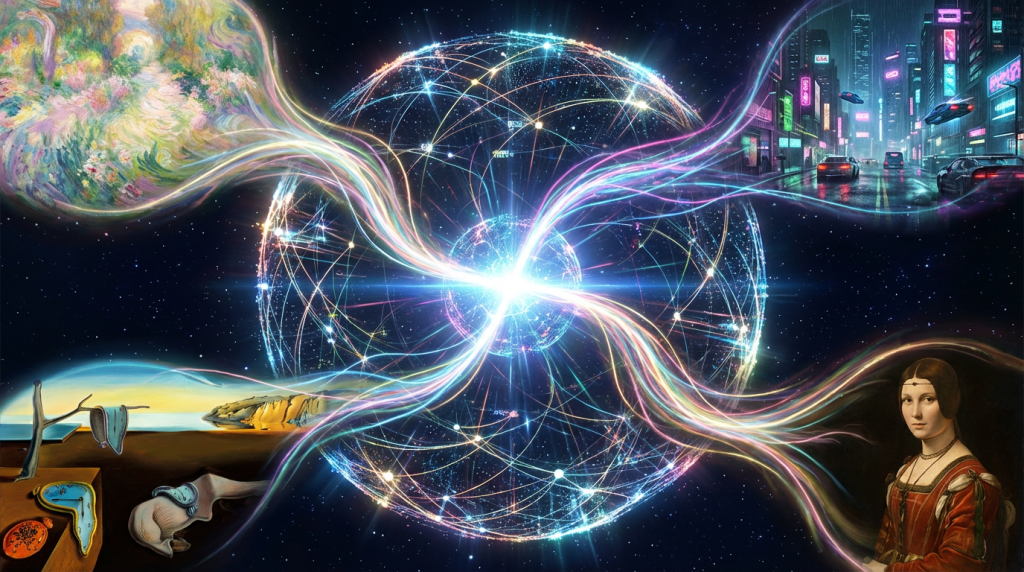
This doesn’t mean AI is “better” at creativity in every meaningful sense, but it has crossed specific thresholds: it can generate more variations, work faster, and combine styles in ways that expand what’s possible.
What This Really Means
The key insight here is that superhuman AI doesn’t look like the movies. It’s not about consciousness or sentience. Instead, AI has surpassed human intelligence in specific, measurable ways: processing speed, pattern recognition at scale, optimization in complex systems, and the ability to handle multidimensional problems that overwhelm human cognition.
A weather prediction AI can process atmospheric data from thousands of sensors, run millions of simulations, and predict weather patterns more accurately than any meteorologist. That’s superhuman intelligence in action, even if it can’t write poetry or understand a joke.
The Uncomfortable Truth
We’re living through a transition point in history. For most of human existence, we were the most intelligent entities on the planet. That’s no longer true in many domains. AI systems regularly outperform humans at specific tasks that require intelligence: analysis, prediction, optimization, and pattern recognition.
This doesn’t mean humans are obsolete. We still excel at general intelligence, emotional understanding, ethical reasoning, and creative insight that connects across domains. But the age of human cognitive supremacy in all areas has ended.
Looking Forward
The question isn’t whether AI will surpass human intelligence anymore—it already has in numerous ways. The real questions are: How do we adapt? How do we ensure these systems benefit humanity? How do we preserve what makes human intelligence unique and valuable while leveraging AI’s superhuman capabilities?
The future isn’t about humans versus AI. It’s about understanding that we’re already living in a world where artificial intelligence has crossed certain thresholds of human capability, and learning to navigate that reality wisely. The sooner we acknowledge this, the better prepared we’ll be to shape what comes next.
The age of superhuman AI isn’t coming. It’s already here. We’re just beginning to understand what that means.




Responses