

Beyond the Hype: 7 Bold AI Predictions for 2026

If 2023 was the year of the chatbot and 2024 was the year of enterprise experimentation, 2025 has been the “bridge” to something far more autonomous. As we look toward 2026, the industry is shifting away from “asking” AI for answers and toward “deploying” AI to complete work. This is the year of Agentic AI, physical embodiment, and a massive reckoning in digital trust.
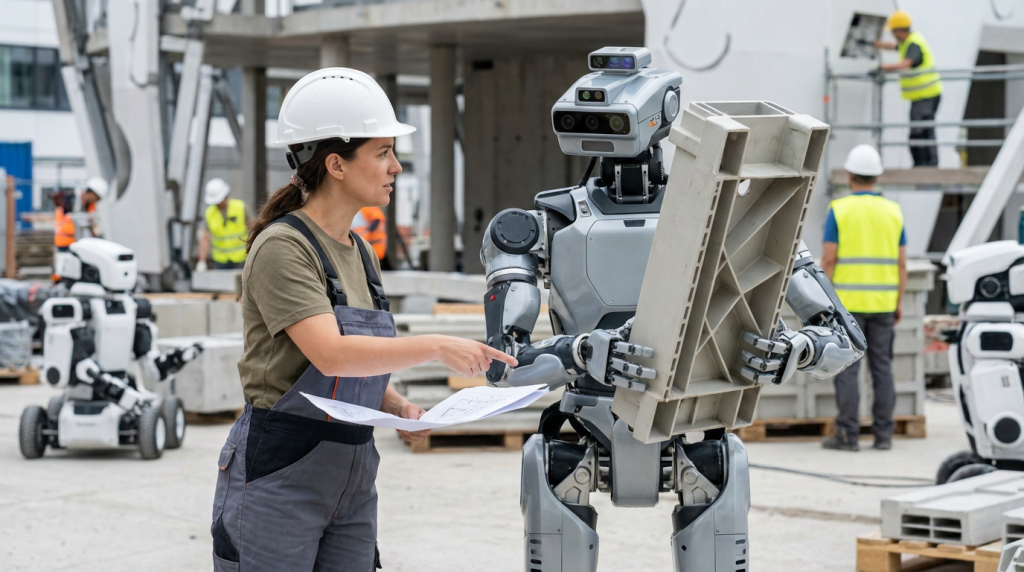
In 2026, AI moves from a tool we talk to, to a teammate that takes action.

1. The Rise of Multi-Agent Orchestration
In 2026, we will stop relying on a single “genius” model to do everything. Instead, the industry is moving toward Multi-Agent Architectures. This isn’t just about one chatbot; it’s about an “orchestrated workforce” where specialized agents collaborate in real-time.
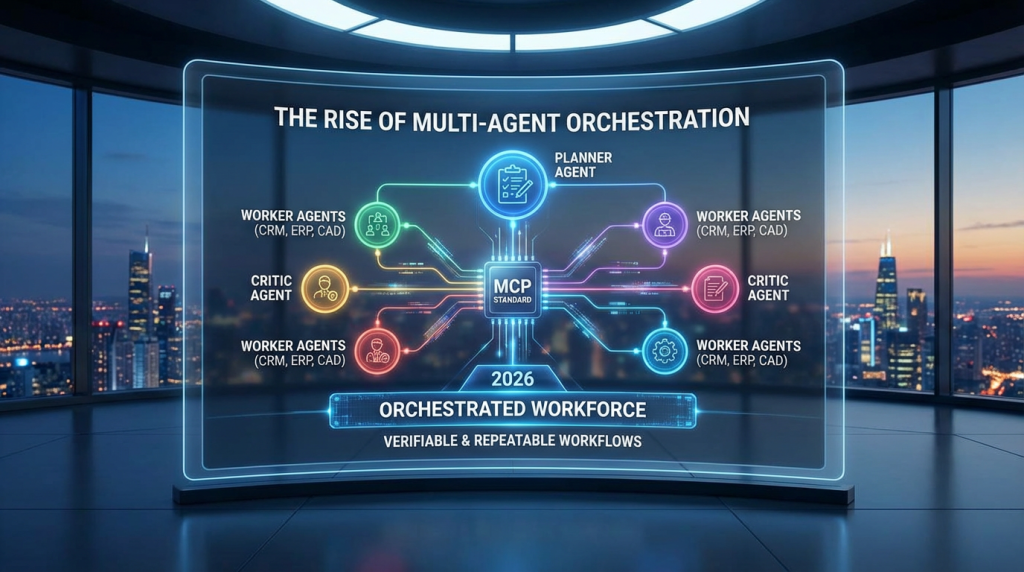
Imagine a complex corporate workflow: A “Planner Agent” breaks a goal into 15 distinct steps, “Worker Agents” specialized in specific software (like CRM, ERP, or CAD) execute the tasks, and a “Critic Agent” validates the output against compliance standards before a human even sees it. Standardizations like the Model Context Protocol (MCP) are becoming the “USB-C” of AI, allowing these agents to plug into data sources and tools without custom coding.
- Why it matters: Complex workflows like procurement, insurance claims, and software development become verifiable and repeatable.
- The Prediction: By the end of 2026, over 40% of enterprise applications will be mediated by autonomous agents rather than static code, with some reports suggesting productivity gains as high as 66% in early-adopter firms.
2. Physical AI: Leaving the Screen
For years, AI has been “software-bound.” In 2026, “Physical AI” will begin to scale. Breakthroughs in World Models—AI trained on physics-native data rather than just text—are allowing robots to move from controlled laboratory settings into messy, real-world environments.
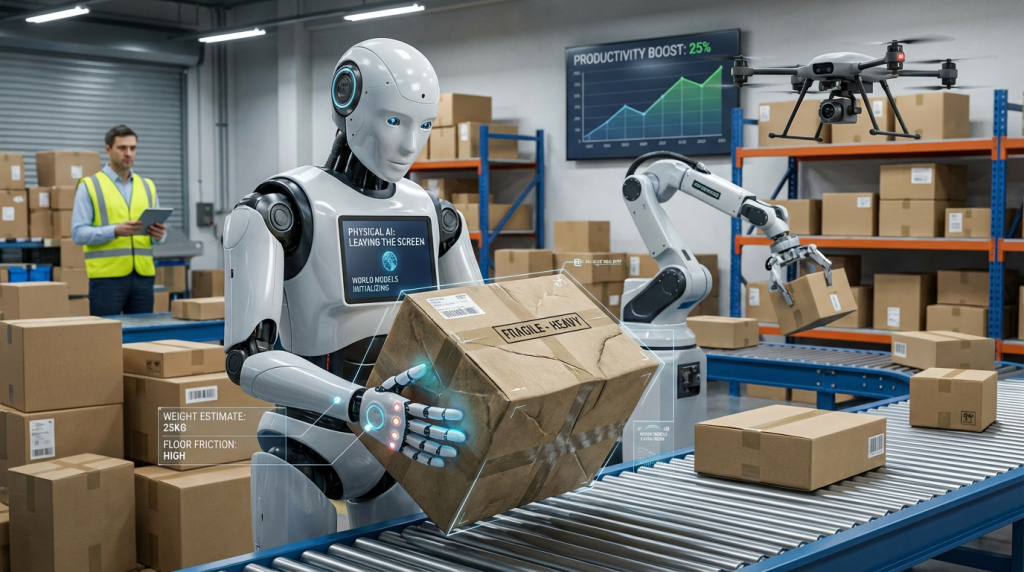
We are seeing the convergence of Large Language Models (LLMs) with Vision-Language-Action (VLA) models. This allows machines to not only see a room but understand the “friction” of a floor or the “weight” of an object. Expect to see the first mass-deployed humanoid workers in logistics and manufacturing. While “Neo” or “Optimus” might still be in high-end facilities, the specialized “physical intelligence” powering robotic arms and autonomous drones will see a 25% boost in productivity across global supply chains.
3. The Infrastructure Reckoning: Power and the “RAM Crunch”
The “brutal physics” of AI will dominate headlines in 2026. As models move toward multi-step reasoning (Chain-of-Thought), the demand for memory (HBM) and energy is skyrocketing. We are entering the era of the “Gigawatt Data Center.”
Major hyperscalers are now outbidding each other for access to nuclear and sustainable energy grids, as power availability—not software innovation—becomes the ultimate bottleneck. Simultaneously, we’ll see a surge in Small Language Models (SLMs) designed to run locally. These “mini” models perform reasoning on-device, bypassing the cloud and solving the “RAM crunch” by performing inference at the edge.
4. The “Synthetic Flood” and the C2PA Defense
By 2026, estimates suggest that up to 90% of online content will be synthetically generated. This “Synthetic Flood” has created a massive trust deficit. To combat this, 2026 will be the year of Cryptographic Content Provenance.
The C2PA standard (Content Credentials) is becoming mandatory for digital media. Search engines and social platforms are beginning to “down-rank” content that lacks a verifiable hardware-signed signature. Authority is the new currency; in a world of infinite AI content, the verified human perspective, backed by original data and traceable origins, is the only thing that will rank in the new era of “Generative Engine Optimization” (GEO).
5. Ambient Intelligence and Spatial Overlays
2026 is the year AI becomes “ambient.” Instead of opening a chat window, AI lives inside our hardware and our environments. This is driven by Spatial Intelligence—the ability for AI to understand 3D space in real-time.
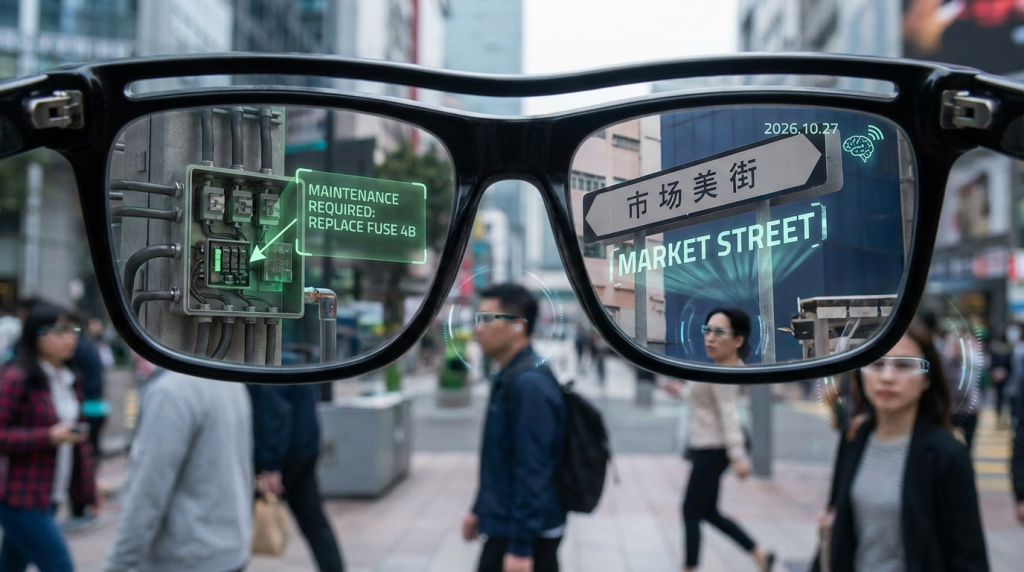
We expect a breakthrough in AI-powered smart glasses. Unlike previous iterations, these are not just cameras; they are reasoning engines. Imagine pointing your glasses at a complex machine and seeing a 3D repair manual floating in the air, or walking through a foreign city and seeing live translations that match the font and style of the original street signs. AI is no longer a destination; it is a lens through which we view the world.
6. Governance: From Ethics to Enforcement
The honeymoon period for unregulated AI is over. On August 2, 2026, the majority of the EU AI Act’s provisions become fully enforceable. This marks a shift from “AI Ethics” (which was voluntary) to “AI Compliance” (which is mandatory).
Companies will now face massive fines—up to 7% of global turnover—for non-compliance with “high-risk” AI requirements. We will likely see the first landmark legal precedents regarding “AI Liability” in healthcare and autonomous transport. Consequently, “Explainable AI” (XAI) will move from a niche research topic to a core business requirement, as companies must prove how their agents reached a decision.
7. Hyper-Personalization: The End of Static Content
In 2026, the concept of a “webpage” or a “video ad” is changing. AI now enables Dynamic Personalization at scale. Instead of seeing the same marketing campaign as everyone else, AI generates a unique value proposition tailored to your specific psychographic profile and current intent.
Gartner projects that nearly 75% of customer interactions will be AI-powered by 2026. However, your “Personal Agent” will also act as a gatekeeper, filtering out low-quality AI marketing and negotiating with “Seller Agents” to find you the best price or service. It’s a battle of the bots, where the human is the ultimate curator rather than the target.
Conclusion: The Watershed Year
The AI landscape of 2026 is defined by a shift from digital magic to physical and economic reality. As we hit the limits of silicon scaling and power grids, the winners won’t be the ones with the largest models, but the ones with the most efficient, trustworthy, and specialized agentic ecosystems. We are moving beyond the hype and into the “Agentic Era,” where AI is no longer just a tool—it is the very infrastructure of modern life.
Disclaimer: These predictions are based on 2025 technological trajectories, including research from Microsoft, McKinsey, and Gartner. The pace of AI development remains exceptionally volatile.




Responses