

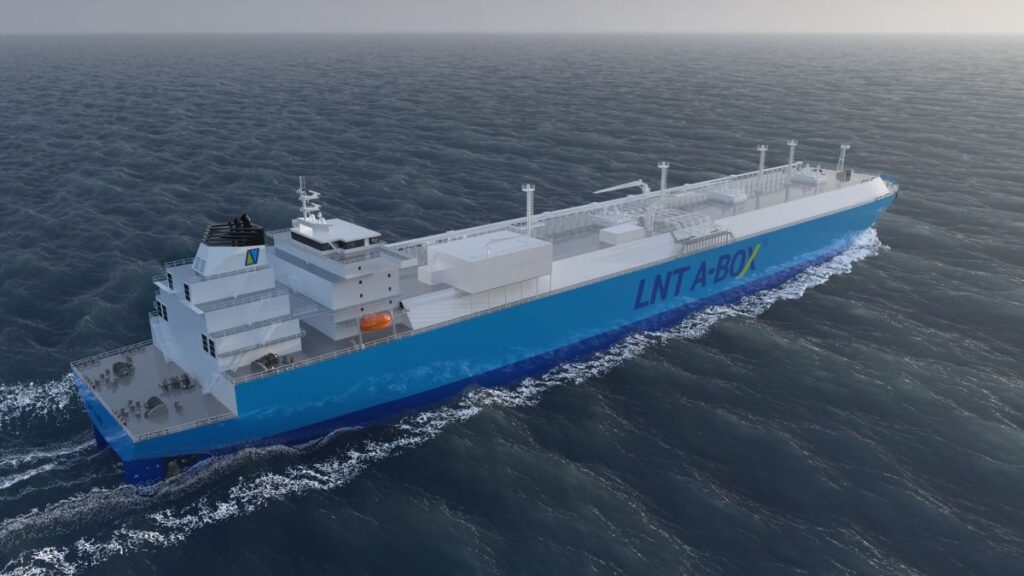
The LNT A-BOX® Cargo Containment System represents a significant advancement in LNG transportation technology. This innovative system combines robust design principles with operational efficiency, addressing key challenges in the industry. By incorporating self-supporting aluminum tanks and independent full secondary barriers, it offers enhanced safety and optimized cargo capacity. The system’s unique approach to insulation and accessibility sets it apart from conventional solutions, promising improved thermal performance and simplified maintenance. As the global energy landscape evolves, the LNT A-BOX® system stands poised to reshape LNG distribution networks, potentially unlocking new market opportunities and cost-effective transport solutions.
The LNT A-BOX® Cargo Containment System audio file
Key Takeaways
- LNT A-BOX® utilizes self-supporting aluminum primary tanks with independent secondary barriers for enhanced safety and efficiency.
- The system features a prismatic design that optimizes cargo capacity and volume utilization in LNG carriers.
- It incorporates liquid-tight insulation as a full secondary barrier, enabling easy monitoring and maintenance.
- The containment system achieves market-leading boil-off rates and low fuel consumption for cost-effective LNG transportation.
- LNT A-BOX® supports local and regional LNG distribution needs, simplifying processes for new market entrants.
Design Principles of LNT A-BOX
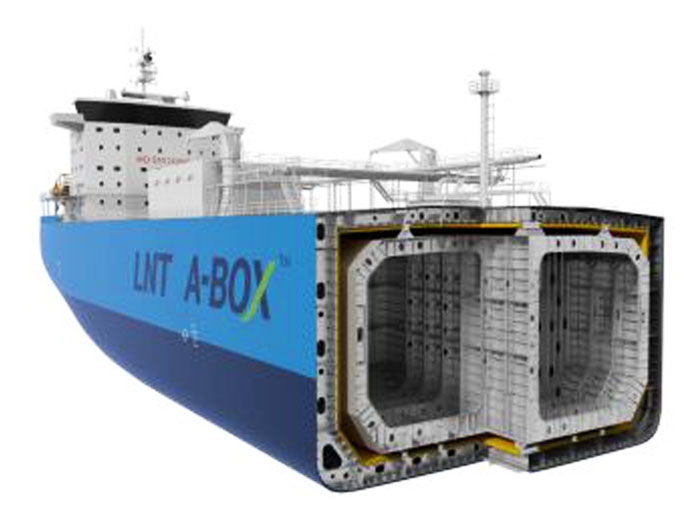
At the core of the LNT A-BOX Cargo Containment System lies a set of innovative design principles that prioritize safety, efficiency, and operational flexibility. The system’s foundation is built upon self-supporting primary tanks constructed from aluminum, a material choice that contributes to the overall lightweight nature of the containment system. This design is further enhanced by the incorporation of an independent full secondary barrier, ensuring an additional layer of safety in the transportation of liquefied natural gas (LNG).
The LNT A-BOX® containment system’s design allows for flexible filling levels, a feature that significantly improves operational efficiency and adaptability to varying cargo requirements. This flexibility is complemented by the system’s efficient hydrodynamic performance and thermal efficiency, which contribute to its market-leading boil-off rate and low fuel consumption. These attributes not only enhance the system’s cost-effectiveness but also its overall operational efficiency in LNG carrier construction and operation.
Furthermore, the design principles of the LNT A-BOX® system have democratized the LNG carrier construction process, enabling more shipyards to participate in this specialized field. This increased accessibility has led to expanded capacity and heightened competition within the industry, ultimately driving innovation and efficiency in large-scale LNG transportation solutions.
Maximizing Cargo Capacity
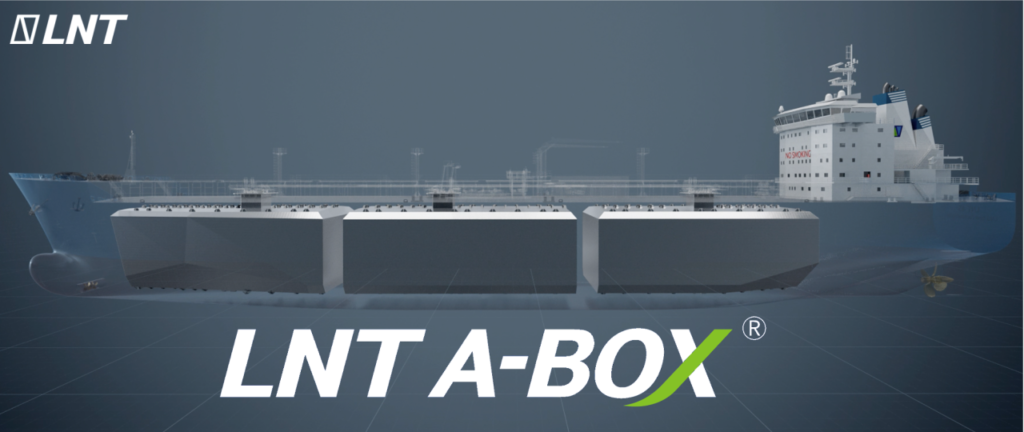
Maximizing cargo capacity stands as a paramount objective of the LNT A-BOX® Cargo Containment System, achieved through its innovative prismatic design and efficient use of available space within LNG carriers. The system’s prismatic shape allows for optimal volume utilization, significantly enhancing the vessel’s cargo-carrying capabilities. This geometric configuration minimizes wasted space, ensuring that every cubic meter of the ship’s hold is effectively employed for LNG storage.
The LNT A-BOX cargo containment system incorporates self-supporting IMO Type-A tanks, which play a crucial role in maximizing capacity while maintaining safety standards. These tanks prevent sloshing and ensure secure containment of liquefied gases, allowing for fuller utilization of the insulated hold space. The system’s design also features independent primary and secondary barriers, further contributing to efficient volume utilization and enhanced insulation performance.
The innovative approach to insulation, with panels bolted to the inner hull, not only facilitates maintenance and inspections but also optimizes the available cargo space. This design element, combined with the cost-efficient construction process, opens up opportunities for new players in the LNG carrier market.
The LNT A-BOX system’s focus on maximizing cargo capacity ultimately translates to improved operational efficiency and economic viability for LNG transportation.
IMO Type-A Tank Technology
Central to the LNT A-BOX® Cargo Containment System’s design is its incorporation of IMO Type-A tank technology, which utilizes self-supporting aluminum primary tanks to ensure robust and efficient LNG storage. This innovative approach to medium- to large-scale LNG containment offers significant advantages in terms of operational efficiency and safety.
The LNT A-BOX system features self-supporting IMO Type-A tanks mounted within a protective secondary barrier, providing enhanced containment and flexibility in the field. Key aspects of this technology include:
- Independent full secondary barriers for improved safety
- Flexible filling levels for optimized cargo management
- Market-leading boil-off rate (BOR) for reduced fuel consumption
The A-BOX cargo containment system’s design prioritizes hydrodynamic performance and thermal efficiency, resulting in superior operational characteristics. By leveraging aluminum construction for the primary tanks, the system achieves a balance between strength and weight optimization, contributing to overall vessel efficiency.
Furthermore, the LNT A-BOX system features advanced engineering that addresses the unique challenges of LNG transportation. The combination of self-supporting tanks and independent secondary barriers not only enhances safety but also provides operational flexibility, allowing for efficient cargo handling and management across various scenarios.
Insulation and Accessibility Features
The LNT A-BOX® Cargo Containment System‘s insulation and accessibility features complement its IMO Type-A tank technology, enhancing safety and operational efficiency through innovative design elements. The system’s liquid-tight insulation serves as a full secondary barrier, significantly bolstering containment reliability. This insulation is strategically bolted to the vessel’s hull, facilitating easy access for maintenance and inspection procedures.
A key feature of the A-BOX® system is its interbarrier space, which enables comprehensive monitoring and maintenance of the containment system. This design allows for continuous assessment of system functionality, ensuring optimal performance and early detection of potential issues. The cargo tank support system further enhances structural integrity by preventing tank movement during transportation.
The A-BOX® system’s dual-barrier design, comprising primary and secondary barriers, allows for independent maintenance and upkeep. This approach not only enhances overall safety but also improves operational efficiency by enabling targeted maintenance activities.
The combination of accessible insulation, monitored interbarrier space, and independently maintainable barriers creates a robust and efficient cargo containment solution. These features collectively contribute to the system’s exceptional performance in terms of safety, accessibility, and long-term reliability.
Cost-Effective Construction Solutions
Cost-effective construction methods are a cornerstone of the LNT A-BOX® Cargo Containment System, offering innovative solutions that streamline LNG vessel production and reduce overall expenses. This system revolutionizes the LNG carrier construction process by simplifying procedures and enhancing efficiency, resulting in significant cost savings for shipbuilders and operators.
The LNT A-BOX® system’s cost-effectiveness is demonstrated through its:
- Versatile construction capabilities, allowing for LNG carrier assembly both within and outside traditional shipyards
- Independent primary and secondary barriers, facilitating streamlined maintenance procedures
- Adaptability to local and regional LNG distribution needs, catering to emerging markets economically
By implementing these features, the LNT A-BOX® system optimizes resource allocation and minimizes construction time, directly impacting the bottom line. The system’s design enables efficient assembly techniques, reducing labor costs and material waste. Furthermore, its adaptability to various construction environments expands potential production locations, potentially lowering logistics expenses.
The cost-effective solutions provided by the LNT A-BOX® Cargo Containment System extend beyond initial construction, encompassing the entire lifecycle of LNG vessels. This comprehensive approach to efficiency ensures long-term economic benefits for stakeholders in the LNG transportation sector.
Market Entry Opportunities
Revolutionizing market dynamics, the LNT A-BOX Cargo Containment System creates unprecedented opportunities for new entrants in the LNG carrier industry by lowering barriers to entry and expanding construction possibilities. This innovative system enables more shipyards to build LNG carriers, fostering increased competition and flexibility in the sector.
By simplifying construction processes both inside and outside traditional shipyards, LNT A-BOX facilitates a broader range of players to enter the market, potentially adding more capacity to the industry. The system’s ability to support local and regional LNG distribution caters to emerging markets’ needs, opening up new avenues for market penetration.
Its independent primary and secondary barriers simplify maintenance and inspections, reducing operational complexities for new entrants. Furthermore, the excellent volume utilization and insulation performance of LNT A-BOX contribute to cost-efficient and sustainable LNG transportation solutions, making it an attractive option for companies seeking to establish a foothold in the industry.
This technological advancement, developed by LNT Marine and Shanghai Merchant, has the potential to reshape the competitive landscape of the LNG carrier market, allowing for a more diverse and dynamic industry structure.
Volume Utilization Advantages
Maximizing cargo capacity through its innovative prismatic shape, the LNT A-BOX® system offers significant volume utilization advantages in LNG carrier design and operation. This cutting-edge cargo containment solution optimizes space efficiency, allowing for enhanced storage of liquefied gases while maintaining structural integrity.
The LNT A-BOX system’s superior volume utilization is achieved through several key features:
- Prismatic shape design that conforms to the vessel’s hull, minimizing wasted space
- Implementation of IMO Type-A tanks, which prevent sloshing and ensure efficient gas storage
- Strategically placed insulation, bolted to the inner hull for easy maintenance access
These elements combine to create a highly efficient cargo containment system that maximizes available space within the carrier. The optimized volume utilization translates directly into increased cargo capacity, enhancing the overall cost-efficiency of LNG transportation.
Furthermore, the LNT A-BOX system’s design facilitates simplified construction processes both inside and outside shipyards. This flexibility in vessel building contributes to reduced construction costs and shorter delivery times.
The system’s excellent insulation performance also plays a crucial role in maintaining cargo integrity during transit, further enhancing its operational efficiency and economic viability in the competitive LNG shipping market.
Insulation Performance Highlights
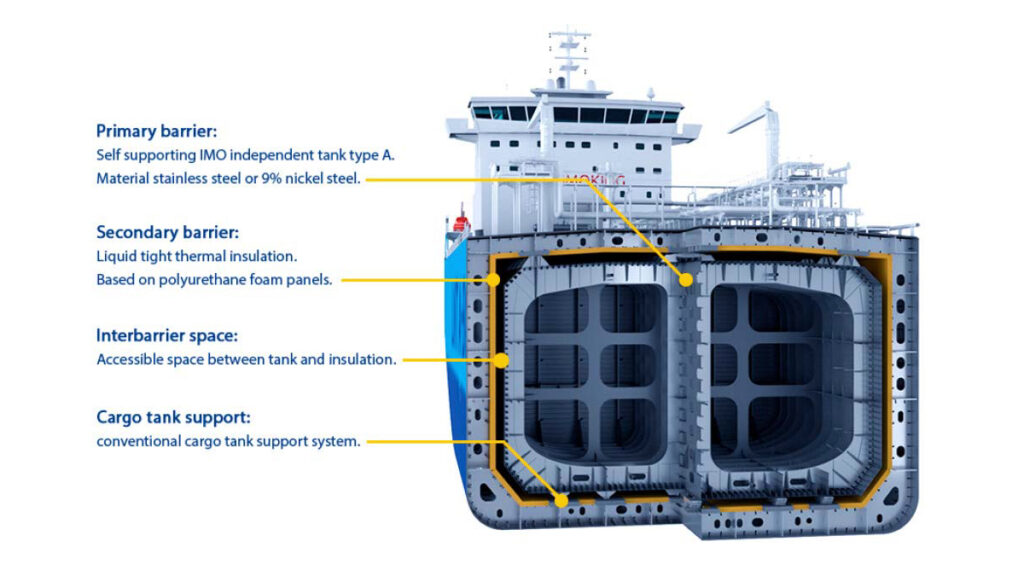
Through its advanced design, the LNT A-BOX® system‘s insulation performance stands out as a critical component in ensuring the safe and efficient transportation of liquefied natural gas. The system features a liquid-tight insulation system that functions as a full secondary barrier, enhancing overall safety during LNG transportation. This innovative approach involves fixing the insulation directly to the vessel’s hull, providing additional protection and improving containment efficiency.
The A-BOX system’s insulation design is engineered to optimize thermal efficiency, effectively minimizing LNG boil-off throughout the transportation process. This thermal management capability contributes significantly to the system’s overall performance and reliability in liquefied gas storage and transport operations. The insulation’s role extends beyond thermal efficiency, playing a crucial part in leak prevention and maintaining secure LNG transportation.
The LNT A-BOX system’s insulation performance highlights demonstrate a comprehensive approach to addressing the challenges of LNG transportation. By integrating advanced insulation technology with robust safety features, the system achieves a balance of efficiency and reliability. This innovative design underscores the importance of insulation in modern LNG cargo containment systems, setting a new standard for performance in the industry.
Impact on LNG Distribution
Beyond its advanced insulation properties, the LNT A-BOX® system significantly impacts the landscape of LNG distribution by enabling efficient transport to emerging markets and supporting the expansion of smaller LNG carrier fleets. This innovative containment system for medium-sized vessels, developed in collaboration with Shanghai Merchant Ship Design, facilitates the growth of diverse marine carriers adhering to IMO regulations.
The LNT A-BOX® system’s impact on LNG distribution is multifaceted:
- Efficient market penetration: The system allows for cost-effective LNG transport to emerging markets, expanding natural gas accessibility.
- Fleet diversification: It supports the development of smaller, regional LNG carriers, enhancing distribution flexibility and market responsiveness.
- Environmental benefits: By facilitating the transition from coal to natural gas, the system contributes to reduced greenhouse gas emissions and improved air quality in target markets.
The insulated hold design of LNT A-BOX® plays a crucial role in sustainable growth by supporting both LNG and future hydrogen distribution. This adaptability positions the system as a key enabler in the evolving energy landscape, bridging current natural gas demand with future clean energy requirements.
Frequently Asked Questions
What Is Cargo Containment System?
A cargo containment system is a specialized structure designed for the safe storage and transportation of hazardous or sensitive materials, particularly in maritime shipping. It encompasses various components and technologies that work together to maintain cargo integrity, prevent leakage, and ensure environmental protection.
These systems typically include primary and secondary barriers, insulation, monitoring equipment, and support structures. They are crucial for transporting liquefied gases, chemicals, and other potentially dangerous substances, adhering to strict international regulations and industry standards.
What Is the Difference Between Type a and Type C LNG Tanks?
Type A and Type C LNG tanks differ significantly in design and application. Type A tanks are self-supporting, typically made of aluminum, and offer cost-effective solutions for LNG transportation, particularly in carriers. They provide efficient volume utilization and are suitable for various vessel types.
Conversely, Type C tanks require additional support structures, are more complex and costly to manufacture. The choice between these tank types depends on factors such as cost, design requirements, and safety considerations in LNG transportation.
What Are Three Tank Types of LNG Cargo Containment System?
The LNG cargo containment system utilizes three primary tank types: Type A, Type B, and Type C.
Type A tanks are self-supporting and commonly employed in large LNG carriers.
Type B tanks feature a prismatic design, engineered for higher pressure containment.
Type C tanks are spherical, typically used in smaller LNG carriers and bunkering vessels.
Each tank type offers distinct advantages in terms of capacity, pressure handling capabilities, and structural design, catering to specific operational requirements in LNG transportation and storage.
What Is Type C LNG Tank?
Type C LNG tanks are cylindrical pressure vessels designed for storing and transporting liquefied natural gas.
These double-walled tanks feature an inner stainless steel or nickel-alloy layer and an outer carbon steel layer, providing high structural integrity and safety.
Type C tanks are engineered to withstand high pressures and maintain efficient insulation for LNG storage.
Commonly used in LNG carriers, these tanks offer superior performance in various transportation applications, ensuring reliable containment of cryogenic liquids under demanding conditions.
Conclusion
The LNT A-BOX® Cargo Containment System represents a significant advancement in LNG transportation technology. By integrating innovative design principles, optimized cargo capacity, and superior insulation performance, this system offers substantial operational and economic benefits.
Its cost-effective construction solutions and enhanced volume utilization contribute to improved efficiency in regional LNG distribution.
As the energy landscape evolves, the LNT A-BOX® system positions itself as a pivotal technology, facilitating sustainable and economically viable LNG transport solutions.